June 1, 2026
A new class of post-9/11 veterans with service-connected disabilities is on the University of Missouri campus this month for an intense, eight-day residency focused on starting and growing entrepreneurial ventures.
Mizzou has hosted residencies for veterans since 2015 as a member of a nine-university consortium that helps deliver the national Entrepreneurship Bootcamp for Veterans (EBV) program based at D’Aniello Institute for Veterans and Military Families (IVMF) at Syracuse University. Veterans United Foundation has sponsored Mizzou’s program since it began.
“As demand for the Entrepreneurship Bootcamp for Veterans grew, Mizzou recognized the opportunity to build something far bigger than a single annual program,” says Ray Toenniessen, IVMF deputy executive director. “With the support of Veterans United, the university invested deeply in creating a veteran entrepreneurship ecosystem rooted in mentorship, rigor and long-term community.”
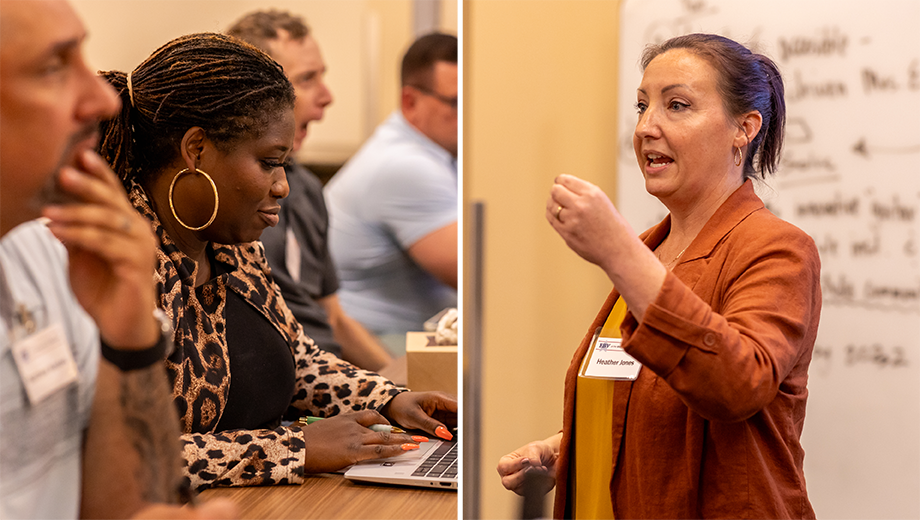 EBV is intentionally immersive and hands-on. The program combines self-paced online coursework, instructor-led education, mentorship and an in-person residency experience hosted through a university consortium model.
EBV is more than a weeklong training — it is part of a broader commitment to helping veterans translate their skills into sustainable businesses that have an economic impact.
Each university partner contributes its own network of mentors, business leaders, investors, alumni and entrepreneurial resources during EBV residencies. Veterans can immerse themselves in environments built around research, academic rigor, mentorship and cross-sector collaboration.
“The EBV program is one of the most special things we are fortunate to be part of at Mizzou,” says Kelsey Raymond, executive director of entrepreneurship programs. “The learning and growth that happens in one short week is truly incredible. And the community that is built between the veterans themselves and with our incredible experts from Mizzou and Columbia, Missouri, is even more impressive.”
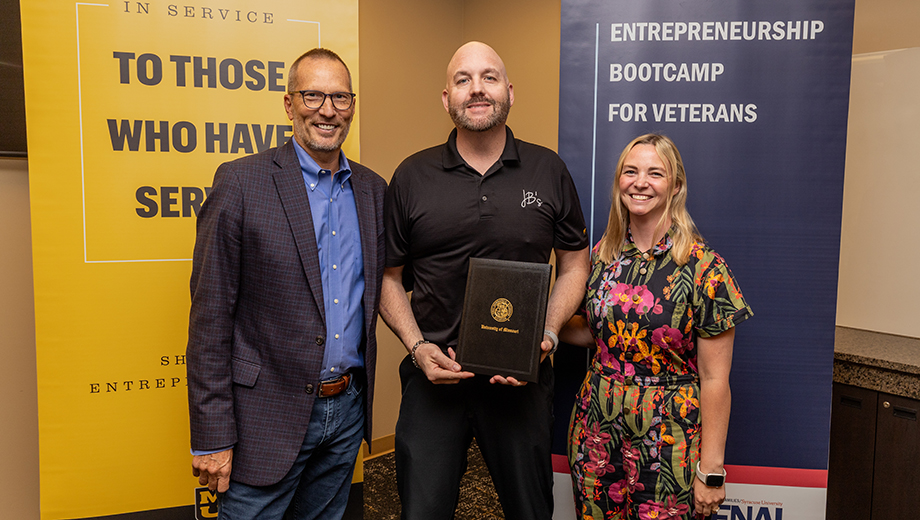 Center, retired marine Joshua Brack, who graduated from EBV in 2025, said the program helped him strengthen the infrastructure of his company, JB’s Gourmet Spice Blends. Greg Bier, entrepreneur in residence, and Kelsey Raymond, executive director of entrepreneurship programs, lead EBV along with Kelly Mattas, senior manager of entrepreneurship programs (not pictured).
Toenniessen says veterans are often uniquely equipped for entrepreneurship because they understand leadership, operational discipline, adaptability and how to execute under pressure.
A hallmark of Mizzou’s EBV program is the depth of expertise veterans can access, from marketing and human resources to research and industry analysis.
In the classroom, presenters focus on giving participants practical tools they can use immediately. For example, one session introduces high-level research databases and local library resources to support market analysis and business planning.
“My goal for the veterans is for them to know there is information available, and that I and my fellow librarians across the U.S. are also available to assist after they leave campus,” says Gwen Gray, business, economics and entrepreneurship librarian at Mizzou Libraries.
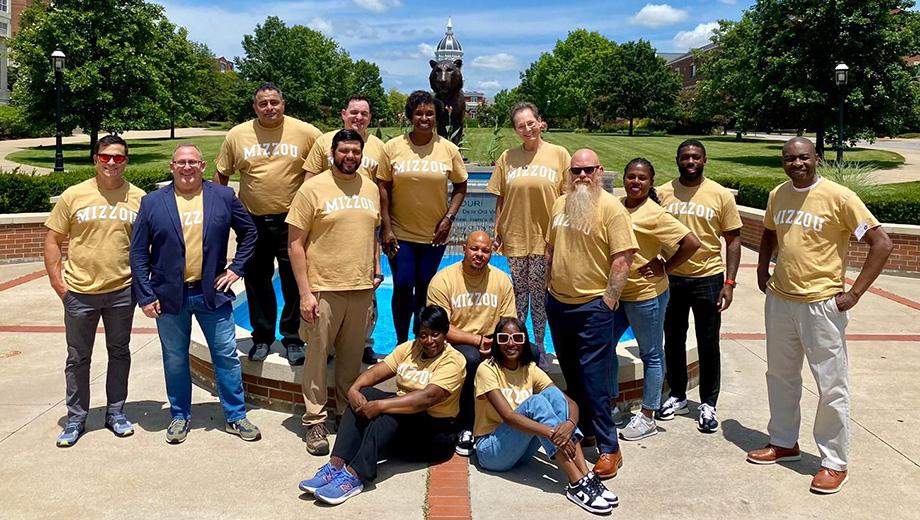 Many graduates describe the EBV community as one of the most valuable parts of the experience, with mentorship and peer relationships continuing long after the residency concludes.
Others emphasize real-world business challenges. Presenter Diamond Scott, director of human resources for commercial real estate company TKG Management Inc., has shared her insights during EBV sessions during the last six years.
“HR isn’t something that can be one-size-fits-all,” Scott says. “I always like to leave EBV participants knowing they have a lot more knowledge in this area than they think they do purely based on lived experiences.”
Research conducted through IVMF’s National Survey of Military-Affiliated Entrepreneurs continues to show strong business survival, revenue growth and job creation among veteran entrepreneurs. Internal EBV reporting also has shown that approximately 79% of EBV graduates go on to either launch or continue growing a business, and more than 80% of those businesses remain operational years later.
“As the EBV network surpasses 4,000 alumni nationwide, a meaningful part of that story runs through Columbia, Missouri,” Toenniessen says. “Eleven years later, the impact is reflected in the graduates, businesses and success stories that continue to emerge from EBV Mizzou cohorts. We are proud to have Mizzou as a valued partner in the EBV consortium.”
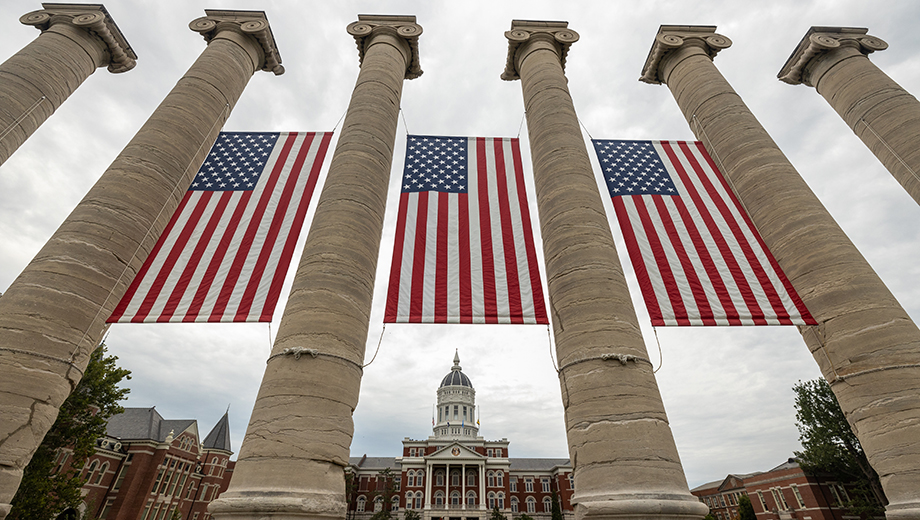 Veterans United Foundation has sponsored EBV since 2015 when Mizzou joined the consortium. Foundation Board President Erik Morse says VU is proud to support a program that gives veterans "the tools, mentorship and network they need to succeed long after their military service ends."